


By The Clock
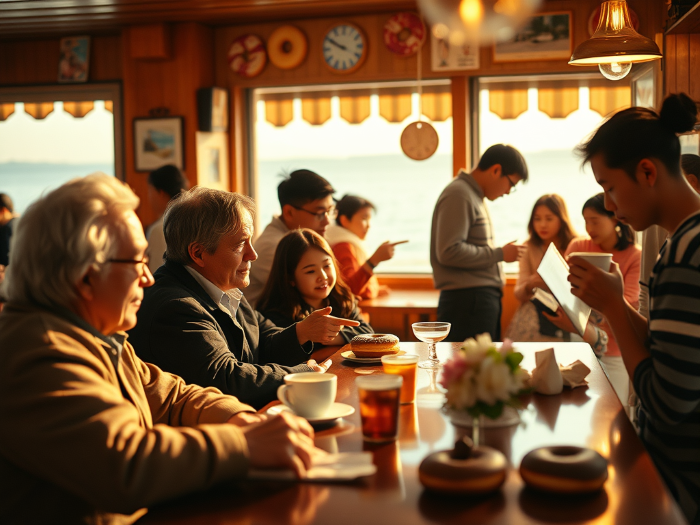
My first job was in a donut cafe by the seaside, working the 6pm-midnight shift. Perfect for someone who’s definitely not a morning person, and the late hours meant I couldn’t spend my earnings in the bars and clubs.
After a few weeks, I started noticing customer patterns.
Between 6pm-7pm, the elderly wandered in, usually alone. They’d order little but settle in for ages, gazing out the windows at the sea. Some just wanted to be around people and have a chat. The cafe was their evening social club.
From 7pm-9pm, the families arrived like a tired parade. Parents looking frazzled, kids red-faced and hangry, everyone desperate for a final treat before heading home. The pressure was palpable – you could feel the “we just need to get through this” energy from across the room.
At 9pm-10pm, the foreign students descended in big groups, perfectly tanned and full of summer energy. They’d stare at our flavour board like it was written in hieroglyphics, utterly baffled. Most settled for vanilla ice cream instead. I mean, what the hell was cinnamon ?
Then came the danger zone – 10pm-11pm brought the drunks. One memorable evening, a man stumbled in, looked me dead in the eye and shouted “You know nothing about fish!”
I pointed out that, seeing as this was a donut cafe, I didn’t need to.
“Aaaahhh… but one day you might!” he replied before tumbling back out into the night.

Different Needs
I began to realise that each group needed something completely different from the exact same space.
For the lonely retirees at 6pm, I made sure to have proper conversations, asking how their day went and what they’d been up to. A five-minute chat often meant more to them than the coffee.
From 7-9pm, speed became my obsession. Anyone who’s ever waited for food with a hangry child understands the pressure. Every second counted.
For the 9pm crowd, I threw myself into learning the 38 flavours in French, Spanish, and German. Sometimes I’d turn ordering into a game, generating louder and louder cheers with each correct answer. Cannelle, canela, and zimt are still stuck in my brain thirty years later.
As for the 10 o’clockers, well, I never did learn anything about fish.

Customer Groups
Looking back after nearly three decades in retail, I realise I’d unknowingly created the foundation of a proper customer strategy. I’d successfully identified different customer types, learned their habits, demographics, what drove them, and what challenges they faced. The cafe didn’t change during those five hours, but the people using it did – affecting what they needed, why they came, and what mattered to them.
I’d also worked out how to create better experiences for each group. One size definitely doesn’t fit all. Saying “zimt” to Doris gets a very different response than it does to an 18-year-old German.
Understanding these customer groups also explained some puzzling data. Why did we sell so much vanilla ice cream late at night?
Because the foreign students didn’t understand the donut flavours.
By addressing that problem, we could boost our more profitable donut sales instead.

Customer Personas
Understanding your customer groups is absolutely essential to long-term success. Break them down into:
- Demographics – The basic facts about who they are
- Psychographics – What they value and believe
- Behaviours – How they actually act and shop
- Goals and Motivations – What they’re trying to achieve
- Challenges – What’s standing in their way
You’ll probably want four to six different personas, depending on your business complexity. Make them specific and detailed, grounded in real observations rather than assumptions. Once you have your personas, give them names. It’s much easier to design for “Stressed Sarah” than “working mothers aged 35-45.”
Then use these personas to drive your marketing strategy, product development, and customer experience decisions. Every choice you make should connect back to serving one of these groups better.
The beauty of this approach is that it works whether you’re selling donuts or running a multimillion-pound ecommerce operation. People are people, and understanding what drives them never goes out of style.
One final thing, and in the spirit of full transparency – that donut cafe is now a fish & chip shop.
Perhaps that drunk bloke was onto something after all.

Need Help With Creating Personas?
Discover our Business Strategy Services to see how we can support


